
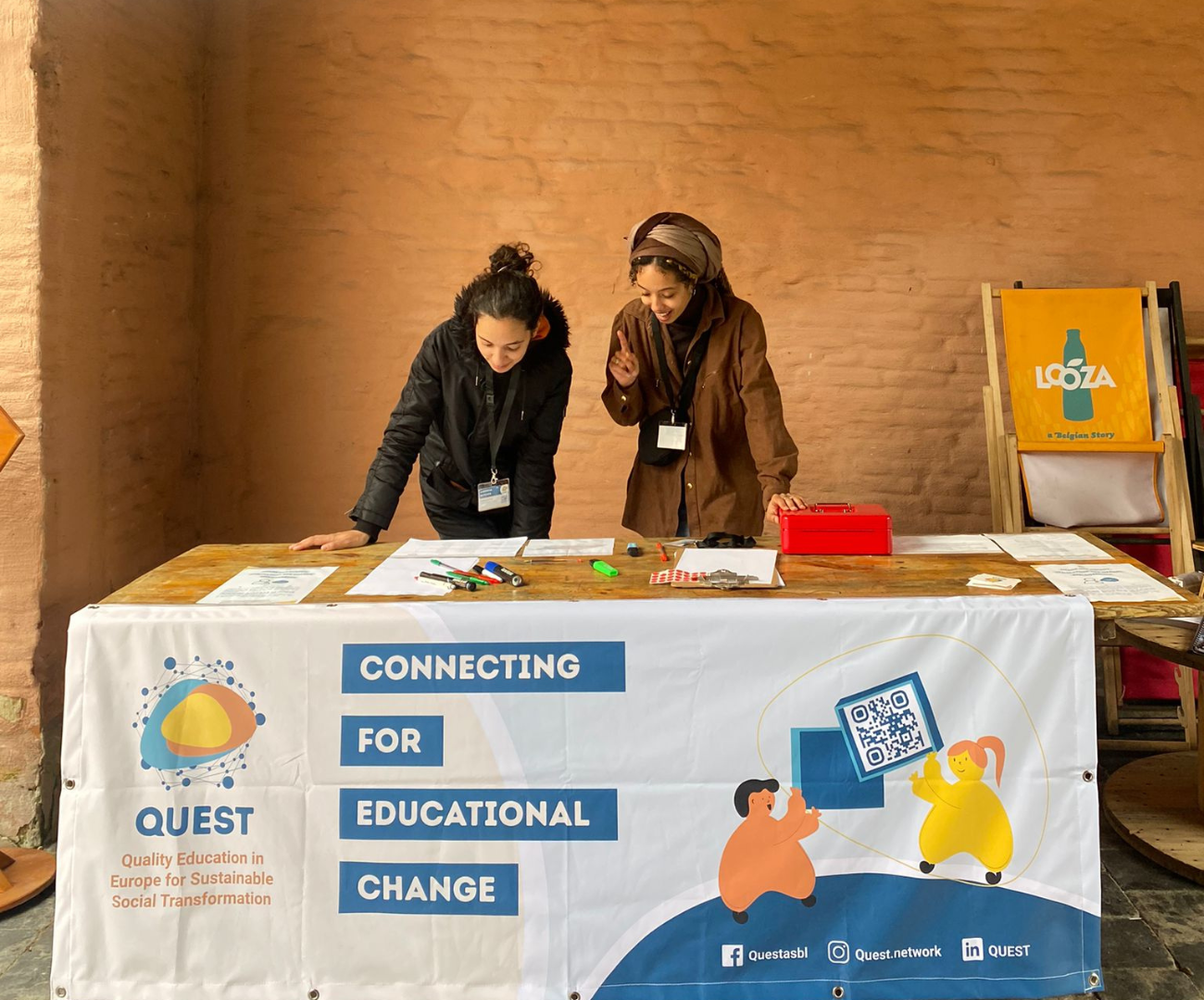


IDEC 2023, the International Democratic Education Conference, offered an exceptional opportunity to bring together educators, students, parents, and advocates from various countries, creating a truly global community committed to the principles of democratic education. QUEST participated in this amazing experience and reached out to democratic communities all over the world, engaging in discussions about freedom, participation and inclusion.
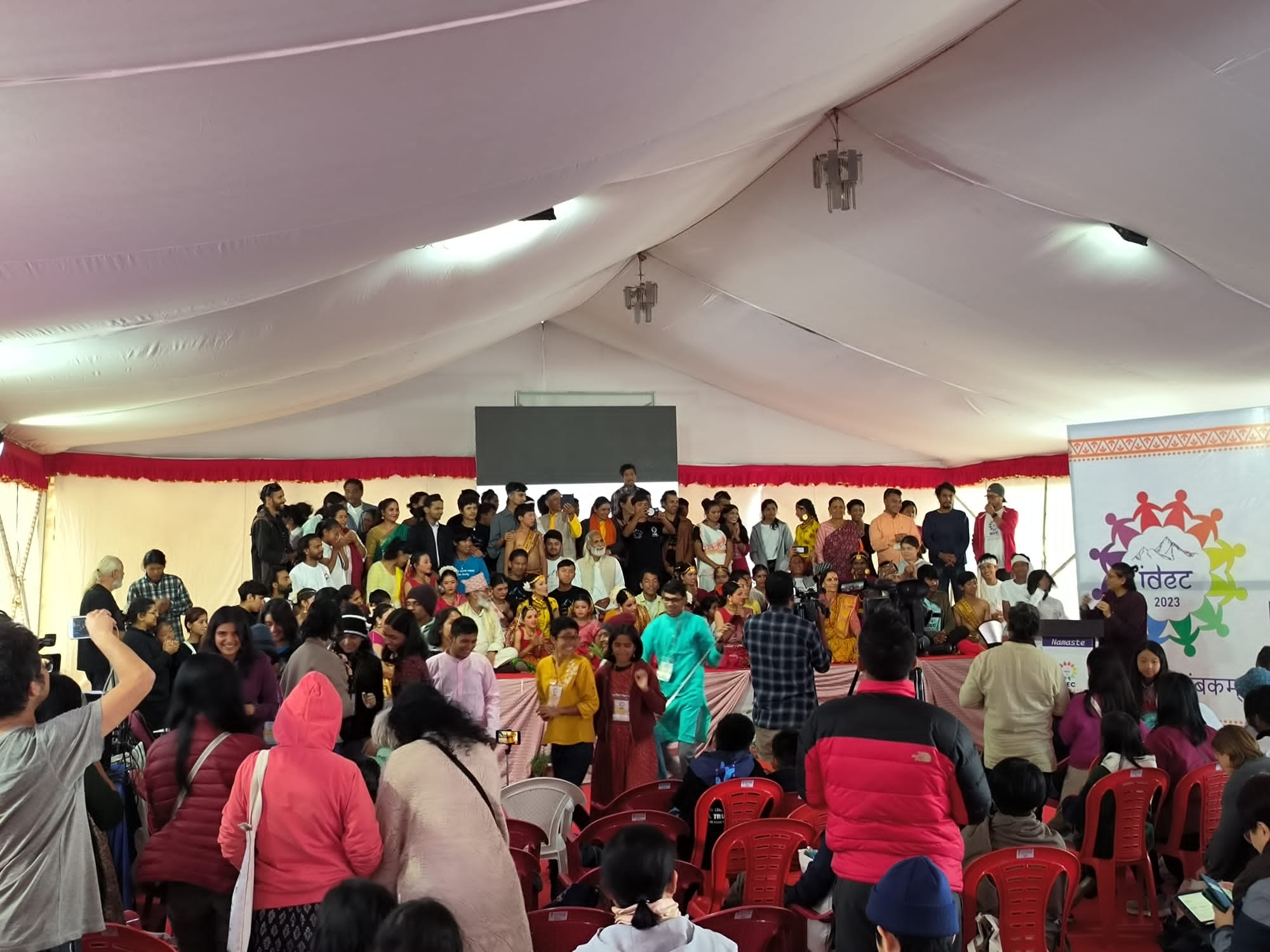
IDEC 2023: an educational landscape of global game changers
IDEC 2023 took place at Kathmandu, Nepal, from the 15th to the 23rd of October. It brought together more than 500 participants from 72 countries. The structure of the conference combined scheduled talks and conferences from experts such as Ian Cunningham and Yaacov Hecht, and an open space for everyone to contribute, in complete autonomy, with workshops, games, forums, round tables etc.
In a fast-changing world that increasingly challenges the democratic principles of freedom and participation, IDEC participants exchanged practices and strategies for more inclusive learning environments and participatory decision-making processes implemented in a wide range of cultural and educational contexts. The international character of the conference provided a platform to discuss and explore how various aspects of democratic education developed within different backgrounds, strengthening the bonds among democratic communities that often feel isolated and struggle with many challenges at the local level.
Freedom in education
The international democratic education community that joined the conference has deliberated to request a clarification on Art.28.1 of the UN Convention on the Right of the Child.
Art. 28.1
- Make primary education compulsory and available free to all
The word “compulsory” can be interpreted as enabling state legislation to make school attendance mandatory, forcing children and parents to participate in the educational monopoly offered by states, without other alternatives. However, as has been clarified by the UN, the element of compulsion refers to the access to education to children, that cannot be hindered by anyone and anything, and therefore must be granted.
In order to pursue an education that aligns with the democratic principles of freedom and protects the individuals – including children – from coercion, the attendees of the 30th International Democratic Education Conference deliberate:
“Respectfully call upon the Committee to make explicit that in the UN Convention on the Rights of the Child the word “compulsory” as used in Article 28. 1 (a) “Make primary education compulsory and available free to all” is to be understood only as a guarantee of access to education, but never as forcing the child to attend school against their will.” Learn more about this request from the IDEC community.
Children’s right to participate: The Children’s Parliament
The Children’s Parliament of India initiative was of great inspiration, bringing together more than 200,000 children organized in neighbourhood parliaments with 17 democratically elected ministers, one for each Sustainable Development Goal of the United Nations.
The parliaments and its ministers have various areas of responsibility: they promote participation and engagement through events and activities and are in charge of meeting needs expressed by the neighbourhood’s children and advancing requests to relevant institutions.
The children parliaments are innovative, child-led participatory structures, providing the opportunity to empower children’s agency in matters that concern them, allowing their voices to be heard and their participation to be valued.
This initiative currently exists in 23 countries.
QUEST’s workshop on inclusion
QUEST organized a workshop on how children can be actors of inclusion in education and society. At the beginning, the journey of the BUSTA project was displayed through a documentary created by QUEST showing how dogs, horses and dolphins can help children build important skills. QUEST animated a discussion on the role of children as protagonists of inclusion. The participants, mostly young students from Nepal, South Korea, India, New Zealand and Europe, passionately shared their own life experiences of inclusion and relationship with animals and how these have impacted them.
This workshop was another proof that children are keen on being at the forefront of inclusion, and therefore it is crucial to provide children with the space to act and be protagonists in their social and cultural life. This is indeed integral to conscious identity building and active citizenship, as the development of openness and inclusiveness are core personal skills that will serve children throughout their life.
The Transnational Character of Democratic Education
Democratic Education’s principles and values have been embraced by many communities all over the world, advocating for substantial changes in traditional educational systems, in favour of more learner-centred and participatory approaches. The important presence of participants from non-western and non-European countries such as India, Sri Lanka, South Korea, Taiwan, Australia, New Zealand, Jamaica, Puerto Rico, Nepal and Japan, is an indicator of the transcultural potential of democratic education values and principles.
QUEST’s participation as a European educational network encompassing many international educational realities in transition is fundamental, not only to bridge between different regional contexts, but to support and promote democratic education around the globe, strengthening bonds and cooperation internationally.