


The hearings of designated commissioners before members of the European Parliament were held in the previous weeks, touching on key challenges faced by the European Union.
The presentation of the agendas for the upcoming mandate demonstrated candidate commissioners’ commitment to fostering a more prosperous, equal, and democratic Union. In an era marked by the erosion of fundamental human rights and the rapid rise of extremism, the imperative of sheltering democratic principles was recognised, and promises were made to ensure ‘no one is left behind’.
However, at QUEST, we believe there was a noticeable lack of attention to children’s rights—particularly in education—which were inadequately addressed and underrepresented in their agendas, along with a questionable portrayal of children in the political discussions.
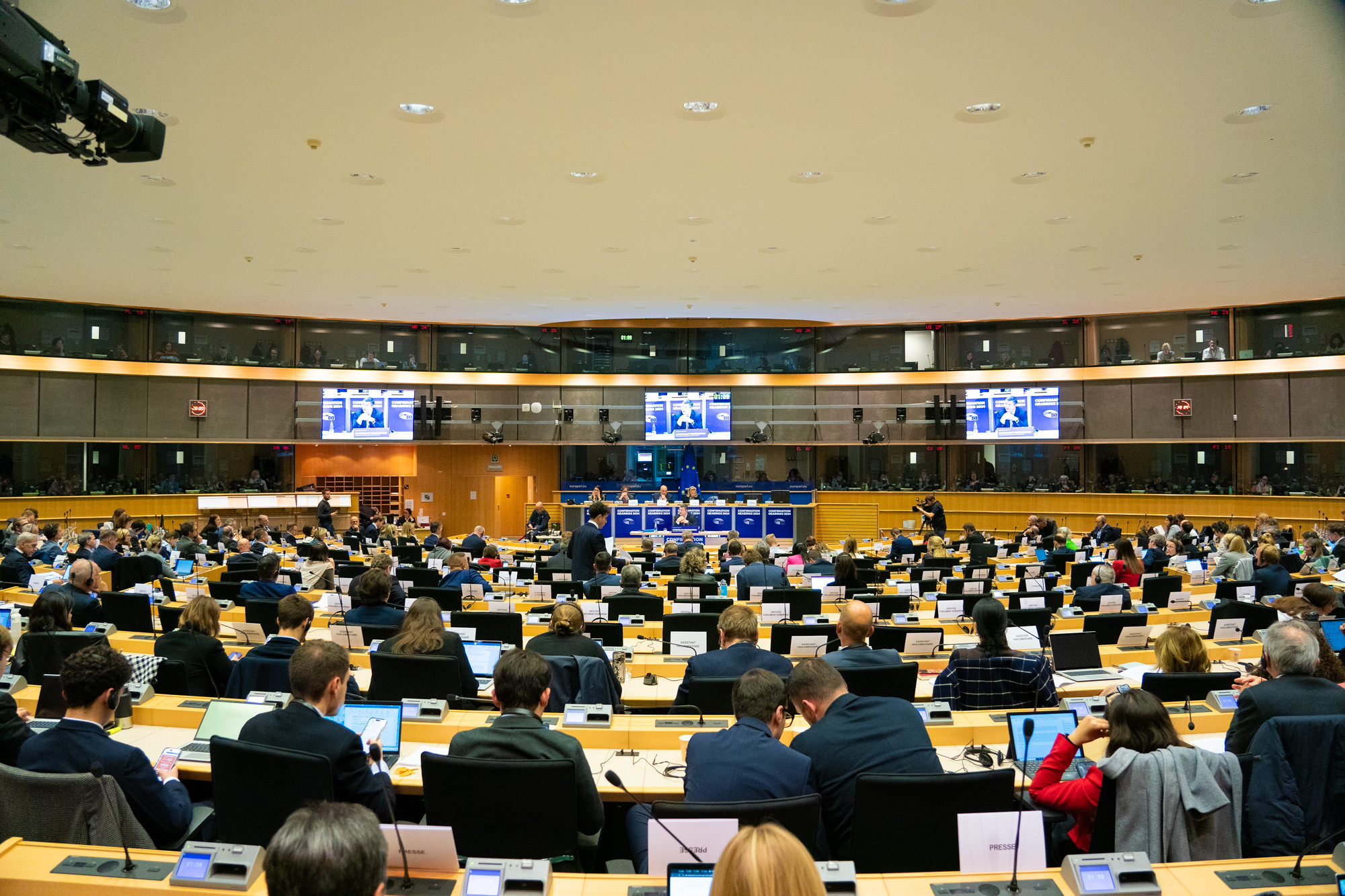
CC-BY-4.0: © European Union 2024– Source: EP
Youth and children: different narratives for different rights
Even though some aspects of children’s rights were discussed, there was an underlying division among youth and children’s rights. More specifically, the candidate commissioners preferred the term ‘youth’ when referring to the importance of empowering young people by involving them in political discussions, ensuring their voices are heard, and thus respecting their right to participation.
On the other hand, when the term ‘children’ was employed, it often carried connotations of vulnerability and the need for protection rather than competence and agency. Children’s rights were primarily discussed through the lens of vulnerability and the need for protection in regard to issues of disinformation, online abuse, and manipulation, while a more holistic view of their rights was missing.
At QUEST, we argue that this framing implies an age bias and the imposition—even unconsciously—of double standards among children and youth rights, ultimately undermining the rights of younger children.
A disempowering approach
Children’s protection is undoubtedly a crucial issue and a fundamental right. However, viewing their rights in a one-dimensional way fails to acknowledge their capacity to engage in crucial matters for their lives.
By thinking of children only as fragile and in need of protection, we not only infringe on their right to participate in matters affecting their lives but also we imperil the cultivation of the resilience needed to cope with challenges. What this framing overlooks is that children, when equipped with the necessary skills, the support of adults as helpers, and the secure and safe environment where to grow, should be considered as active subjects of their lives, not just passive recipients, as they have the ability to take informed decisions and progressively take control of their life and navigating its challenges.
Only by empowering children early in their development can we ensure they grow into resilient and capable individuals, prepared to actively participate in society and carry these qualities through their youth and into adulthood.
Children: citizens in the making
“We have a union of values based on a shared vision of equality. This is what we are leaving to our children tomorrow, and I hope they will not face the same rollback in human rights that we’ve seen today.”
This statement, made by the Commissioner-designate for Preparedness, Crisis Management and Equality, while laudable, underscores the “problematic” portrayal of children in today’s societies.
It reflects a broader social pattern of viewing children primarily as future adults rather than as individuals with immediate rights and needs. This future-oriented perspective risks perpetuating a failure to address children’s agency and rights in the present—a concern that is justified when examining the agendas and priorities of the candidate commissioners, where children’s rights were inadequately addressed and underrepresented as noted earlier.
A pervasive social belief: the implications for children’s participation
The picturing of children as incompetent to engage with challenges and merely passive individuals affects their visibility and participation across multiple domains.
Data from surveys and polls that capture children’s perspectives reveal that young participants under 13 remain a minority in such consultations, thereby depriving them of their right to be heard.
Similarly, participation structures and mechanisms on the European and national levels—such as youth councils and parliaments—are designed for older children, preventing younger ones from participating. In the educational settings, opportunities for primary school children to engage in decision-making are also limited, with only a few member states establishing students’ councils at this level, compared to secondary schools.
The need to design more effective policies for children
To develop more successful policies for children, it is critical to address the legal definition of “children” by considering the various age groups covered by the term and their unique needs.
For instance, creating opportunities for youths does not imply that we are upholding children’s rights as a whole, as younger children are not included in these actions. The failure of considering younger children’s viewpoints may have detrimental effects in their lives, since it’s not only discriminatory by violating their rights, but it also inhibits the development of policies that truly address their needs.
By excluding the experiences and voices of younger children, policymakers risk creating framework, policymakers risk creating frameworks that are ill-suited to the challenges they face, further entrenching systemic barriers to their participation.
Our position
QUEST advocates for an urgent need to move beyond a mere protectionist portrayal of children and to adopt a more empowering approach toward them.
This shift is not just a moral imperative, it is a societal one. Children deserve to be seen as more than the vulnerable individuals we safeguard. They are agents of change, thinkers, and leaders in their own right. It is time for policymakers, educators, and society at large to embrace this reality and create the conditions for children to thrive—not just in the future, but here and now.