Join our membership

Unveiling Ripple effect of the BUSTA project : Exploring the Continued Journey beyond Europe

While not directly tied to the Busta project, QUEST, actively participated in the International Democratic Education Conference (IDEC) held in Kathmandu, Nepal, in October 2023. During the event, QUEST organized a session focused on inclusion, encouraging children to actively contribute to fostering inclusive practices

As an illustrative example of their past initiatives and to initiate dialogue, QUEST presented a sneak peek of the BUSTA project activities spanning all three countries and diverse contexts. The participants comprised children from Santa Fe, Kathmandu, Seoul, Bangalore, and Pondicheri. Notably, the theme of training therapy animals emerged as particularly captivating for students, proving to be a highlight for the younger age group at the conference.


The session progressed into a lively exchange, with participants expressing their reactions to the showcased videos. Engaging questions were posed, such as how the videos made them feel, their interest in acquiring similar skill-building experiences, which activities intrigued them the most, and how such experiences could be integrated into their school and living environments. This discussion prompted animated responses, with each child eagerly sharing personal experiences, memories, comments, and even photos circulated around the room.


The discourse expanded to encompass the Nepalese students’ unique relationship with sacred cows, leading to discussions about school related experiences with elephants, buffalos, and bats. This workshop stood out as the only instance where Nepalese children passionately shared their feelings and convictions, particularly regarding vegetarianism and their strong connection to cows—a perspective that contrasts sharply with the exploitation of cows in many Western countries. Parents present expressed delight at witnessing the cross-cultural exchange among the children. The enthusiasm was so palpable that no one wanted to conclude the session. To capture the ongoing dialogue, I suggested that all the children share their stories on camera throughout the week. For the adults seeking more in-depth information, I encouraged them to join QUEST as members, ensuring access to the forthcoming impact report and guidelines from the BUSTA project. These resources would empower schools to replicate similar skill-building experiences within their own settings. Additionally, I informed them about the upcoming release of the BUSTA documentary on the subject. Although the discussion focused on animals more than on traditional notions of inclusion related to disabilities, the exploration of other life forms emerged as a powerful catalyst for engagement and generating interest about these topics.
More publications

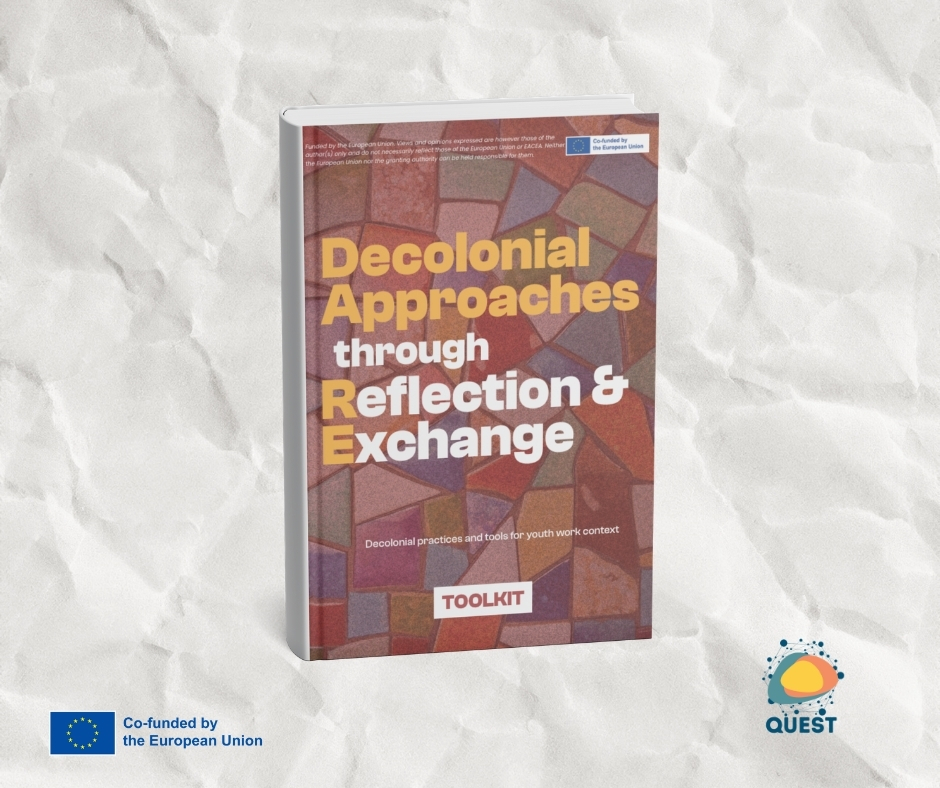
Decolonial Approaches through Reflection & Exchange Toolkit

This toolkit is the result of a 5-day training bringing together youth workers from Belgium, Greece, Italy and Spain, learning and putting into practice decolonial and anti-oppressive approaches Here, you will find clear information and tools to learn about colonial legacies, whiteness and systemic inequalities, and how to put decolonial and anti-oppressive approaches into practice through step-by-step instructions, tips and feedback from the youth workers who already took the training.

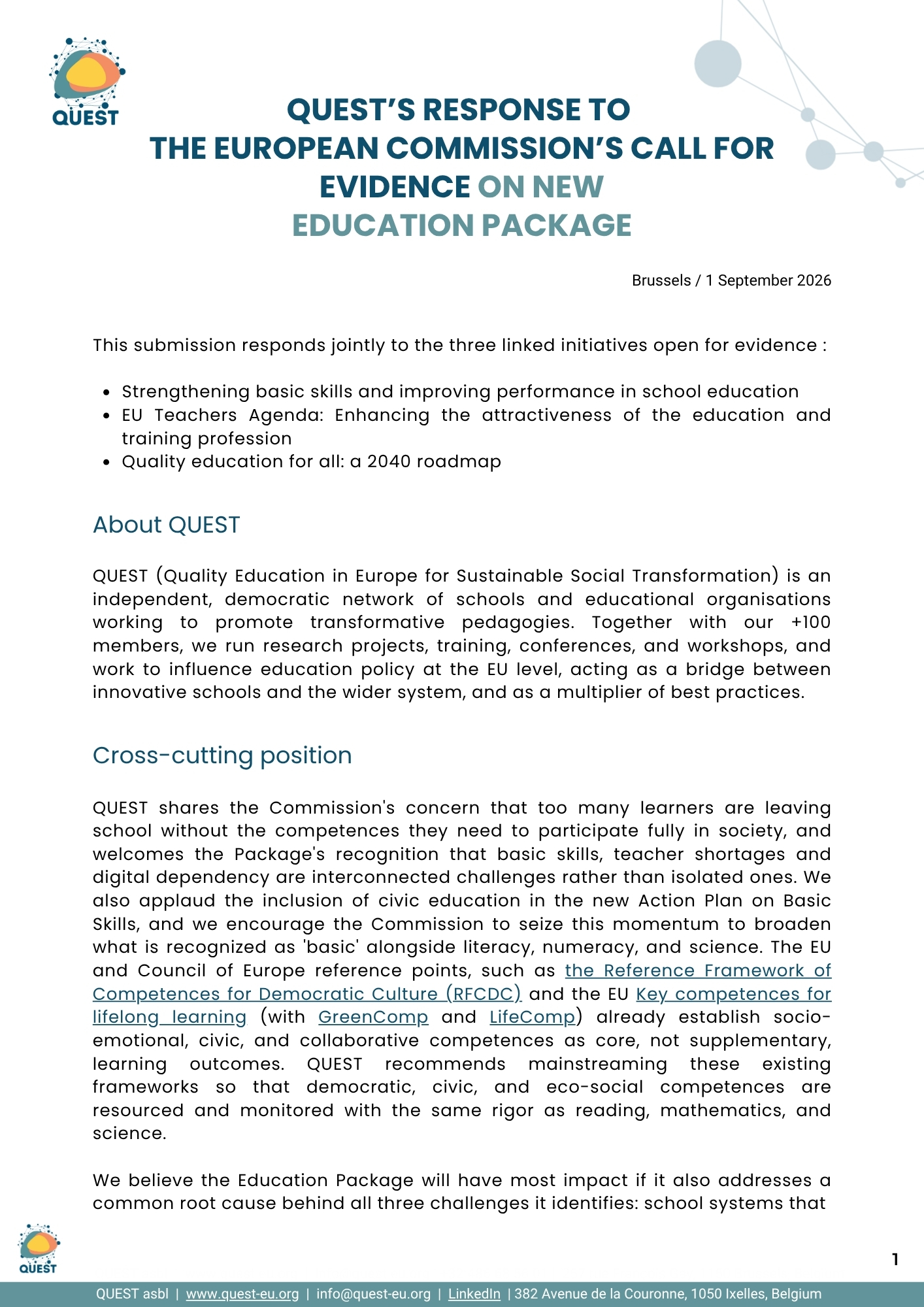
QUEST’S Response to the European Commission’s Call for Evidence on New Education Package

This submission responds jointly to the three linked initiatives open for evidence : - Strengthening basic skills and improving performance in school education - EU Teachers Agenda: Enhancing the attractiveness of the education and training profession - Quality education for all: a 2040 roadmap

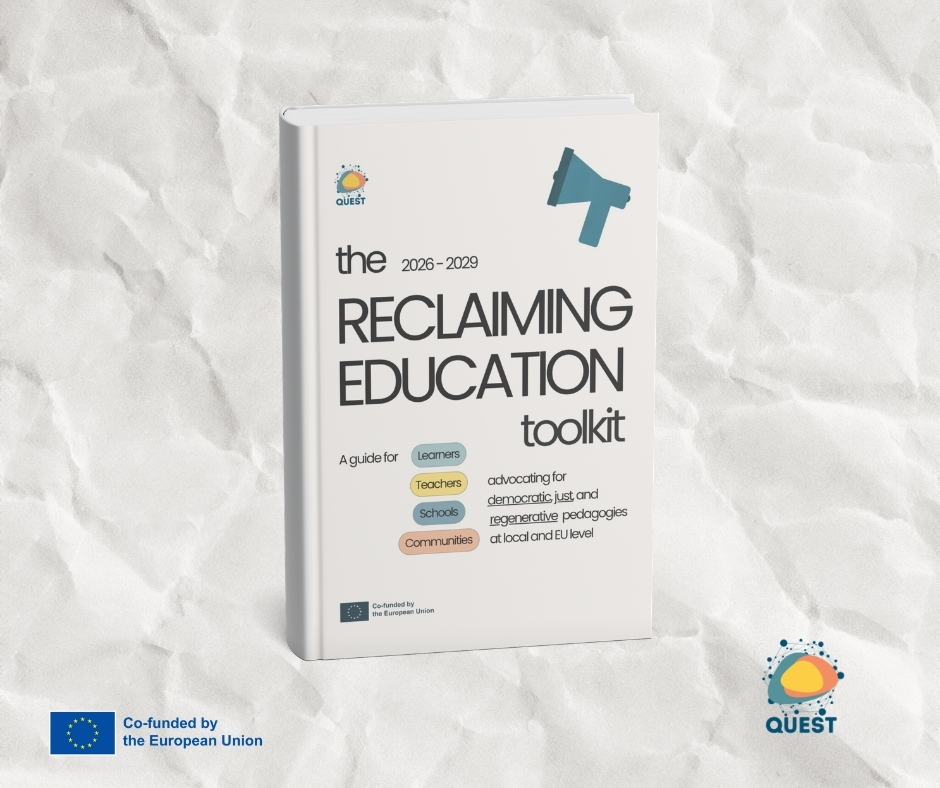
The Reclaiming Education Toolkit

This toolkit wants to demystify EU advocacy and help you navigate local and European decision-making, so that your school / organisation can raise their concerns and visions for education at different levels.

Cala Wioska School

Cala Wioska School

Biography coming soon.

Creating a Safe, Inclusive and Supportive Classroom

Sehlim Charles

Biography coming soon.

Young Children’s Voices in Educational Decision-Making: Power and Participation in Disadvantaged Preschool Classrooms

Duygu Yalman Polatlar

Duygu Yalman Polatlar is an Assistant Professor at Fatih Sultan Mehmet Vakıf University, Türkiye. Her research focuses on early childhood education, children’s literature, children’s rights, and children’s participation.

Alperen Avcı

Alperen Avcı is a lecturer at Muş Alparslan University, Türkiye, and a PhD candidate in Preschool Education at Fatih Sultan Mehmet Vakıf University.

Rights-based Participation of Children with Special Educational Needs in Educational Decision-Making

Lenka Mazáková

Lenka Mazakova is a co-founder of the Slobodna skola. She specializes in inclusive educational practices for students with diverse needs and behavioural challenges in democratic school environments.

From Participation to Practice: How Evidence-Based Wellbeing and Equity-Focused Leadership Can Shift Power Towards Children’s Voices in Education

Geetika Goyal

Biography coming soon.

Jayne Carter

Biography coming soon.

Reimagining Educational Research Through Children’s Participation: Insights from Transdisciplinary and Participatory Approaches

Sarah Zerika

Sarah Zerika holds a PhD in Educational Sciences and is a Substitute Research and Teaching Fellow at the University of Geneva’s Centre for Children’s Rights Studies. Her research focuses on children’s rights and participation in education, school climate, transdisciplinary approaches, and the ethics of research involving children.

Johanna Zelck

Johanna Zelck is a research and teaching assistant at the Martin-Luther-University Halle-Wittenberg. Her doctoral research focuses on children’s interpretation and negotiations of the generational order and adultism.

Maude Louviot

Biography coming soon.

From Consultation to Co-Creation: Child Leadership in Practice in Bosnia & Herzegovina and Serbia

Nejira Pasic

Nejira Pašić is the Children’s Rights Project Lead for Southeast Europe at the Global Campus of Human Rights, where she leads children’s rights mainstreaming and programming, including the Child Leadership Team and Youth Advisory Group. She is also a Lecturer at the Sarajevo School of Science and Technology, teaching research methods, public policy and human rights.