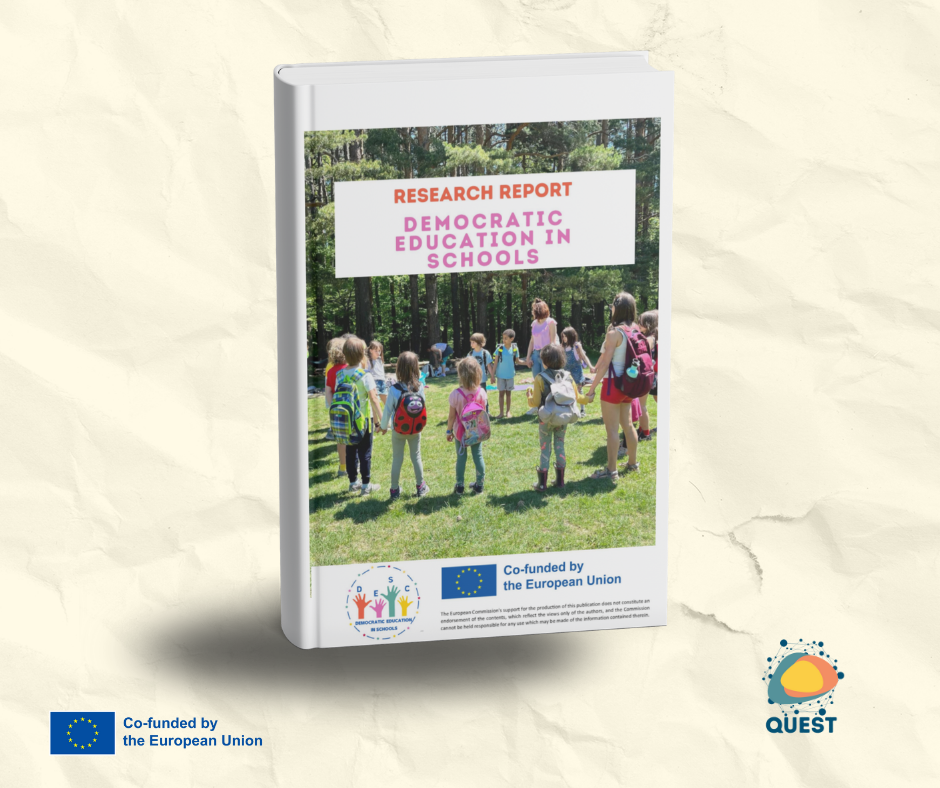
The DESC project (Democratic Education in Schools) was funded by the Erasmus+ funding KA2, and it started in February 2022. This three-year project has the objective to put in communication democratic schools and state schools from four countries, plus a university, a school network, in order to start a dialogue and offer training to the public education system with which the state schools could enrich their daily life at school and promote Life and Citizenship competencies.
In this context, this research was set up as the building block of this three-year project, in order to explore the state of the art of democratic education in Europe, and to explore the possibilities of the application of democratic education in state schools.
The “Research Report on Democratic Education in Schools” was produced by the partners of the DESC project and published in January 2023. Martina Paone, research manager at QUEST, has been the main researcher coordinating the study.
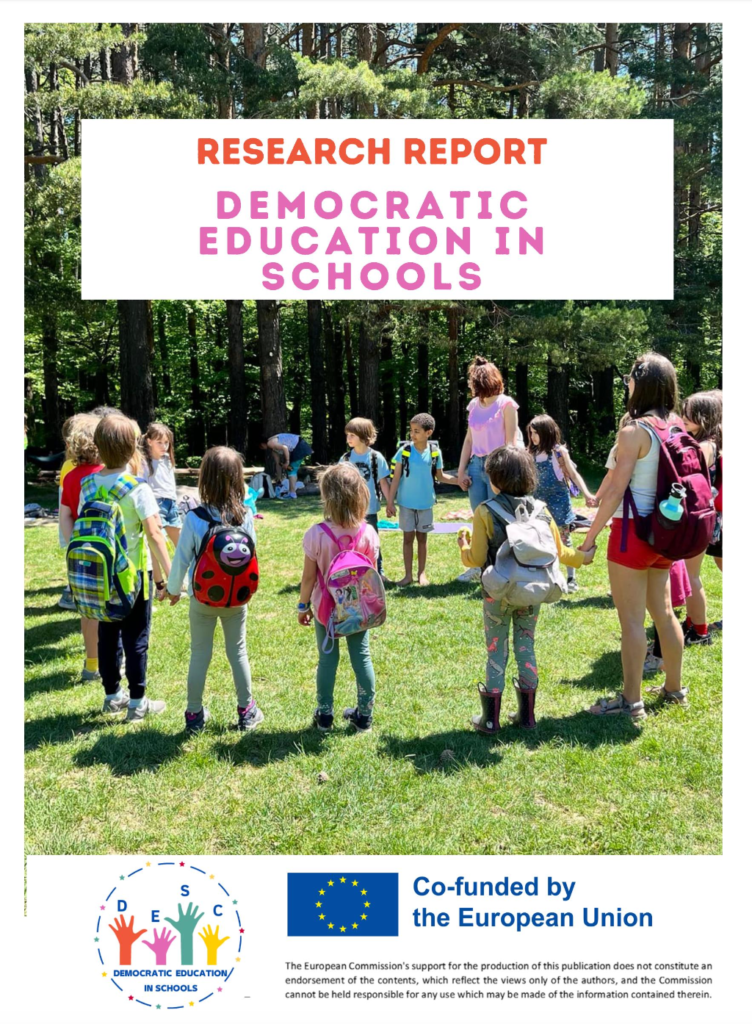

For more information, please reach out to Martina Paone: martina@quest-eu.org

Funded by the European Union. Views and opinions expressed are however those of the author(s) only and do not necessarily reflect those of the European Union or the European Education and Culture Executive Agency (EACEA). Neither the European Union nor EACEA can be held responsible for them.