Join our membership

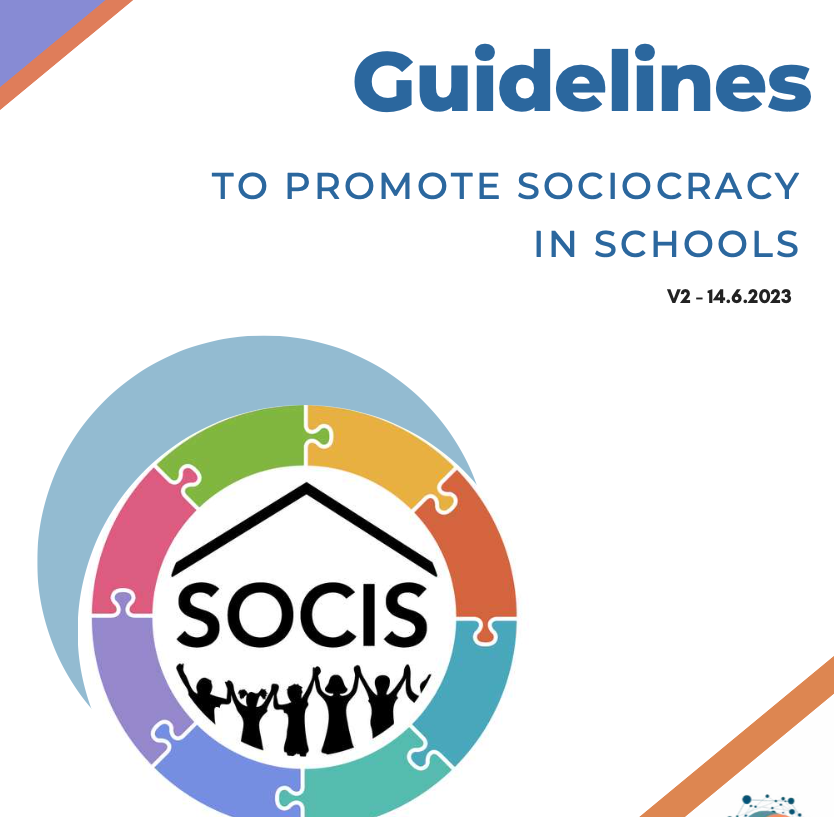
Guidelines: Sociocracy in schools

SOCIS is a European project funded by the Erasmus+ Programme (Key Action – 210 – Small scale partnership cooperation for Innovation and Exchange of Good Practices).

The duration of the project is of 16 months, from 01/04/2022 to 31/07/2023

SOCIS is implemented by 2 European Countries (Belgium and Austria).

The partnership is made up of one European Network promoting Quality Education (QUEST) and one organisation promoting sociocracy (Soziokratie Zentrum).

The project has the ambition to support the development of sociocracy in European schools, in order to offer an innovative and democratic management of schools

where every person involved has an active participation in decision- making and where every voice is heard.

This guidelines document is one of the three main activities of the SOCIS project.
For more information, please reach out to Martina Paone: martina@quest-eu.org

More publications

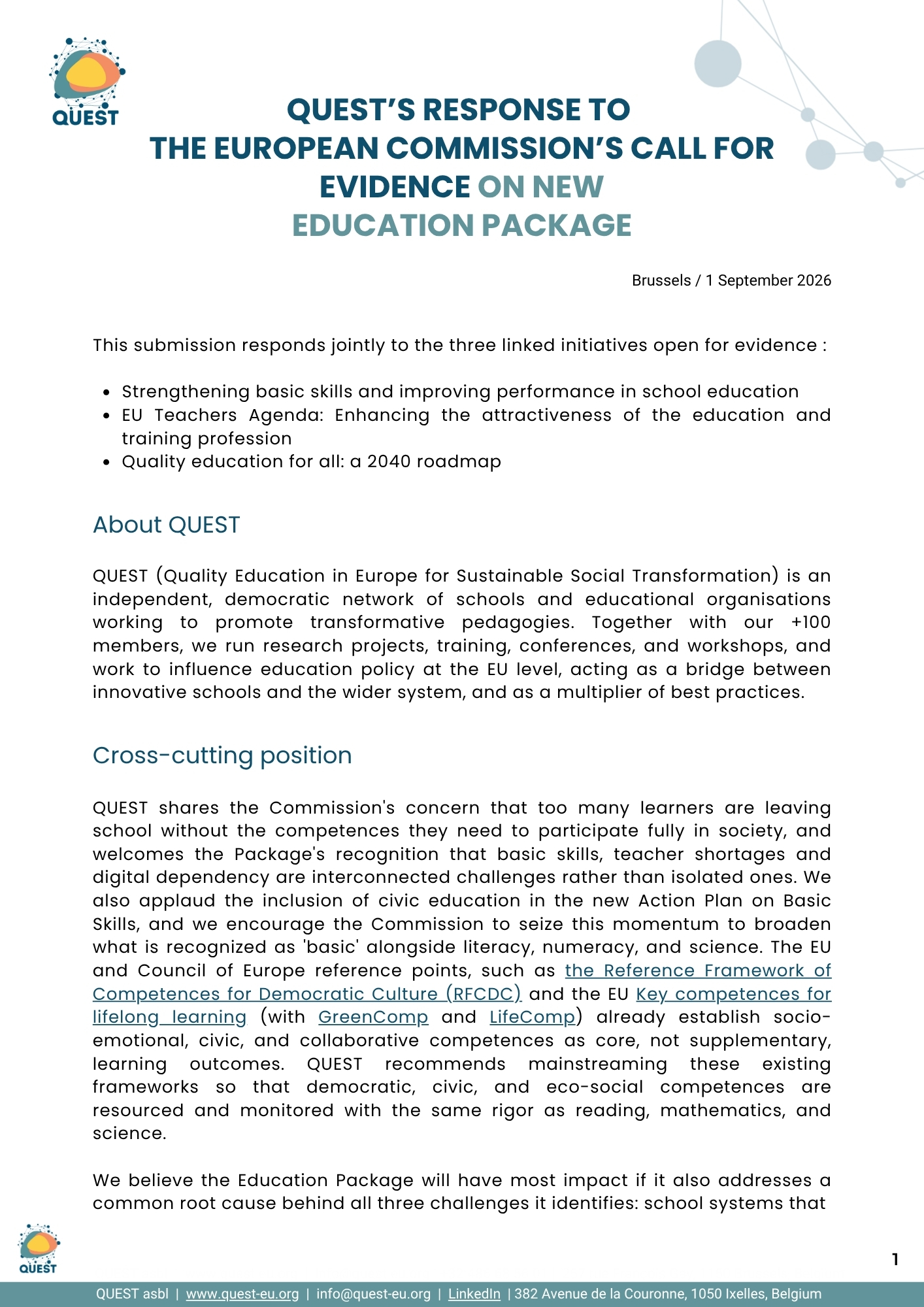
QUEST’S Response to the European Commission’s Call for Evidence on New Education Package

This submission responds jointly to the three linked initiatives open for evidence : - Strengthening basic skills and improving performance in school education - EU Teachers Agenda: Enhancing the attractiveness of the education and training profession - Quality education for all: a 2040 roadmap

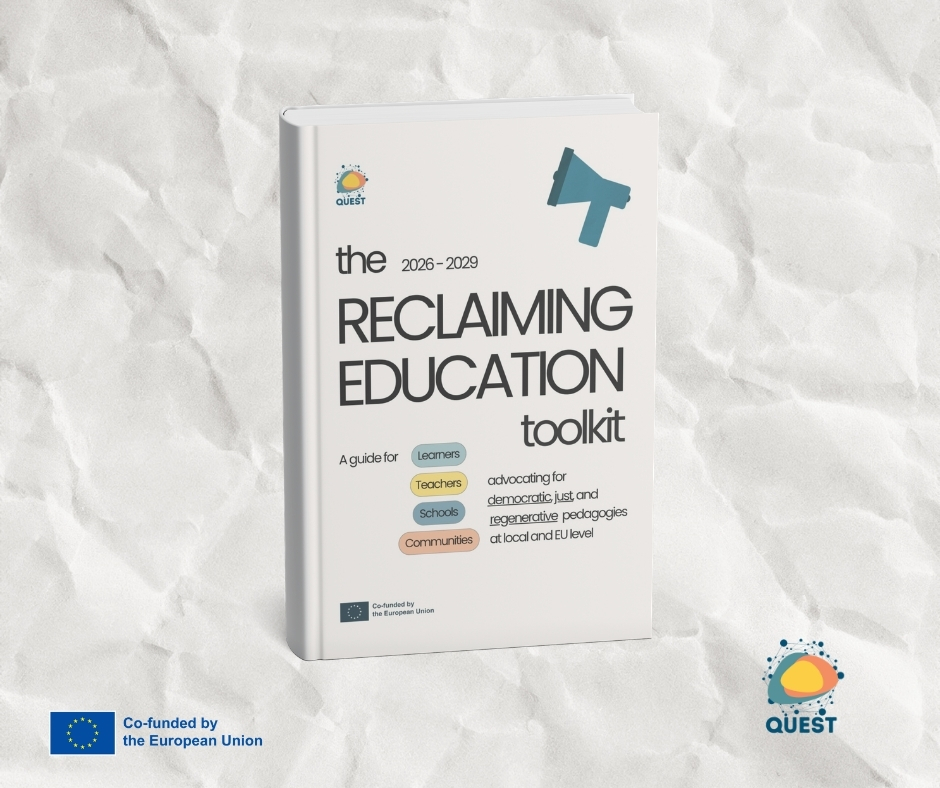
The Reclaiming Education Toolkit

This toolkit wants to demystify EU advocacy and help you navigate local and European decision-making, so that your school / organisation can raise their concerns and visions for education at different levels.

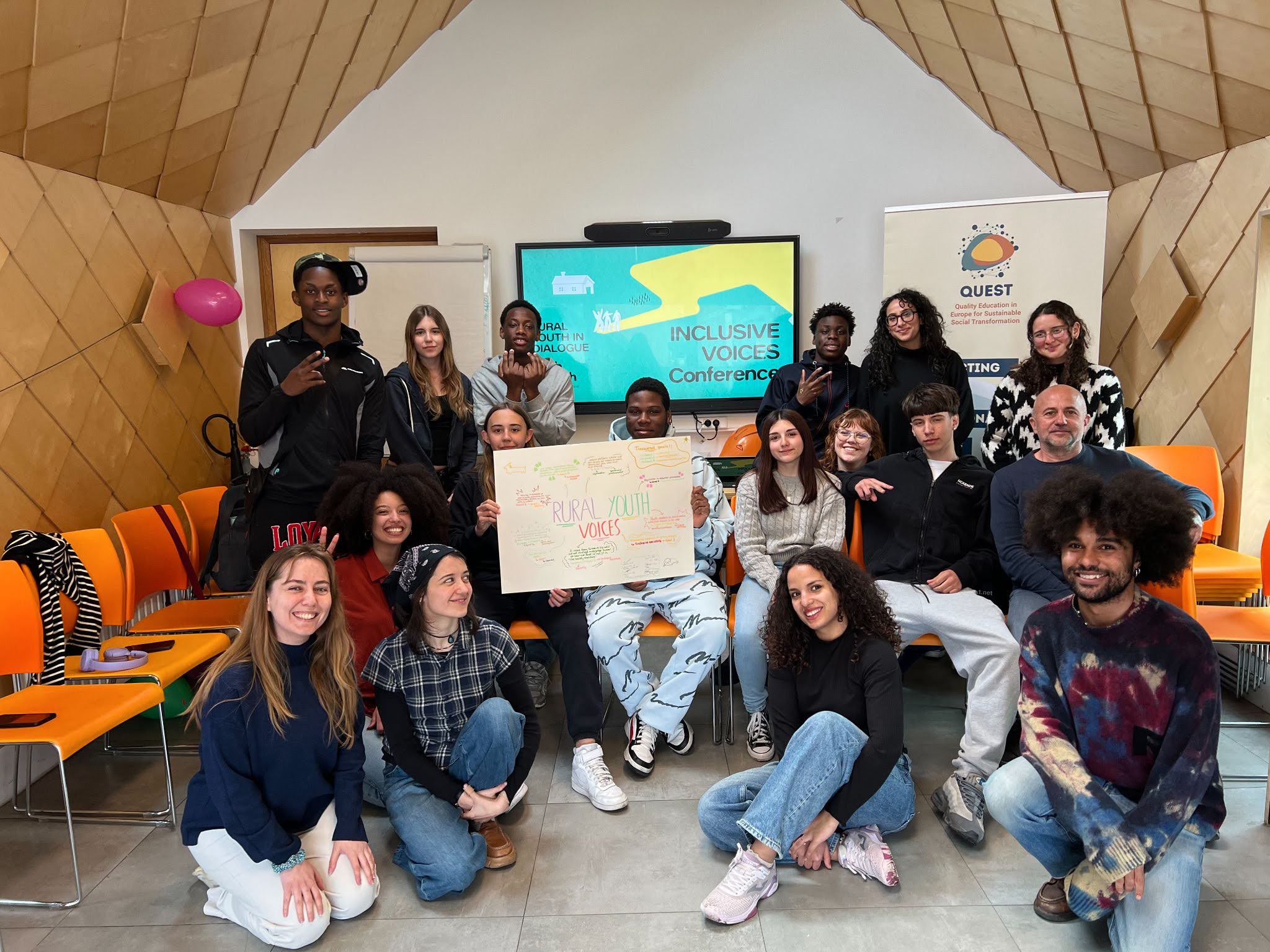
The Change We Want: A Manifesto by Rural Young People in Europe

At QUEST, we believe young people don’t need adults to translate what they want to say. Too often, they are tokenised, routinely consulted to check a box, yet shut out from meaningful decision-making on the very issues that shape their lives. They need real space to say it, and real doors opened to the people who can act on it. Giving rural youth the room to define their own demands, in their own words and their own format, and then walking those demands into institutions like the EESC and the Committee of the Regions, is exactly the kind of empowerment we exist to make possible.