
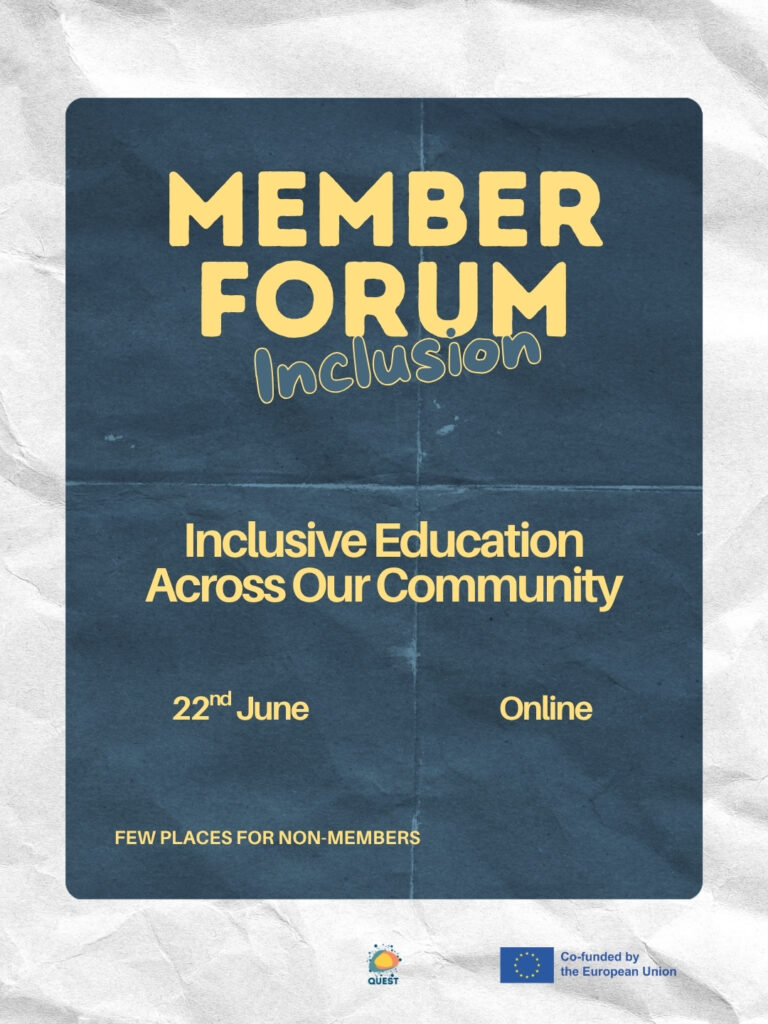
Inclusive Education Across Our Community I 22nd June, 2026 I Online
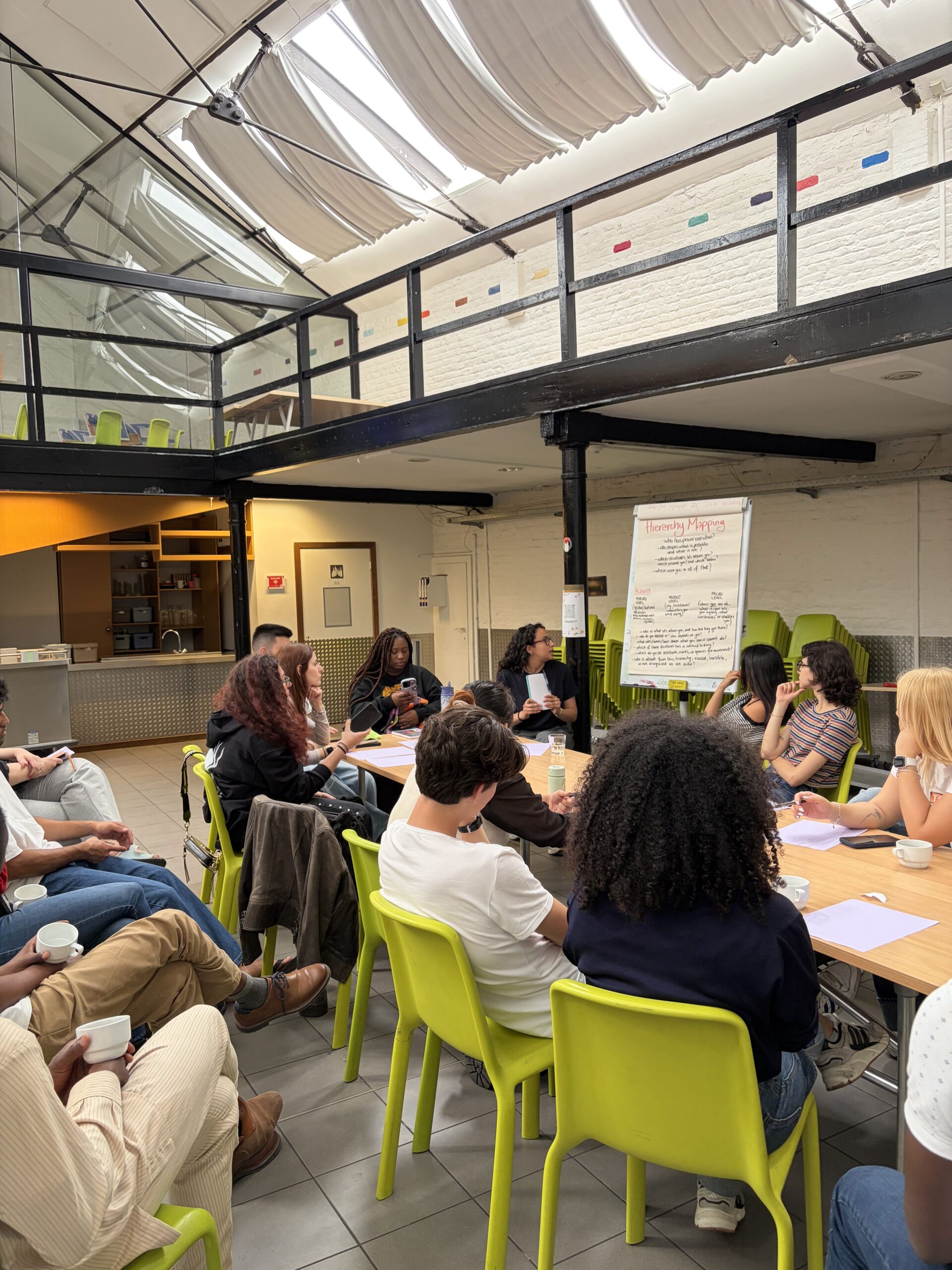
Member Forums are spaces where our community comes together to exchange ideas and share successful educational practices, as well as discuss challenges related to different educational topics. This year’s theme focuses on inclusive pedagogies which have proved to better support students from non-dominant socioeconomic backgrounds, and aims to enrich our understanding of inclusive education practices and challenges across our community.
What to expect
QUEST will present what decolonial pedagogies are and how they question what counts as knowledge, whose knowledge is valued, and how learning is structured so that education is not centered only on dominant (often Western, middle-class) ways of thinking and being, but also reflects the experiences of students from minority groups, such as low-income, racialized, migrant, refugee, and LGBTQI+ learners.
Not a QUEST Member?
Are you not part of our membership? No worries. We are opening a few spots for non-members, including educators and organisations who want to take part. Fill in this form to sign up.
Members Best Practices
The CooLaborar model - Agrupamento de Escolas Manuel de Maia
CooLaborar is a learning model that views students’ agency in a holistic way. Rooted in the principles of democratic education, it supports the idea that by enabling students’ agency in their educational communities, we cultivate learners’ sense of belonging. Through the dual engine of the student agency model, they explain that by positioning students as co-creators of their curriculum, we co-construct with them their active citizenship. This model holds that we can only prepare students for future democratic participation as adults by empowering them to shape the education systems they are part of as children
Educating with Empathy - Toma Socolescu Vocational School
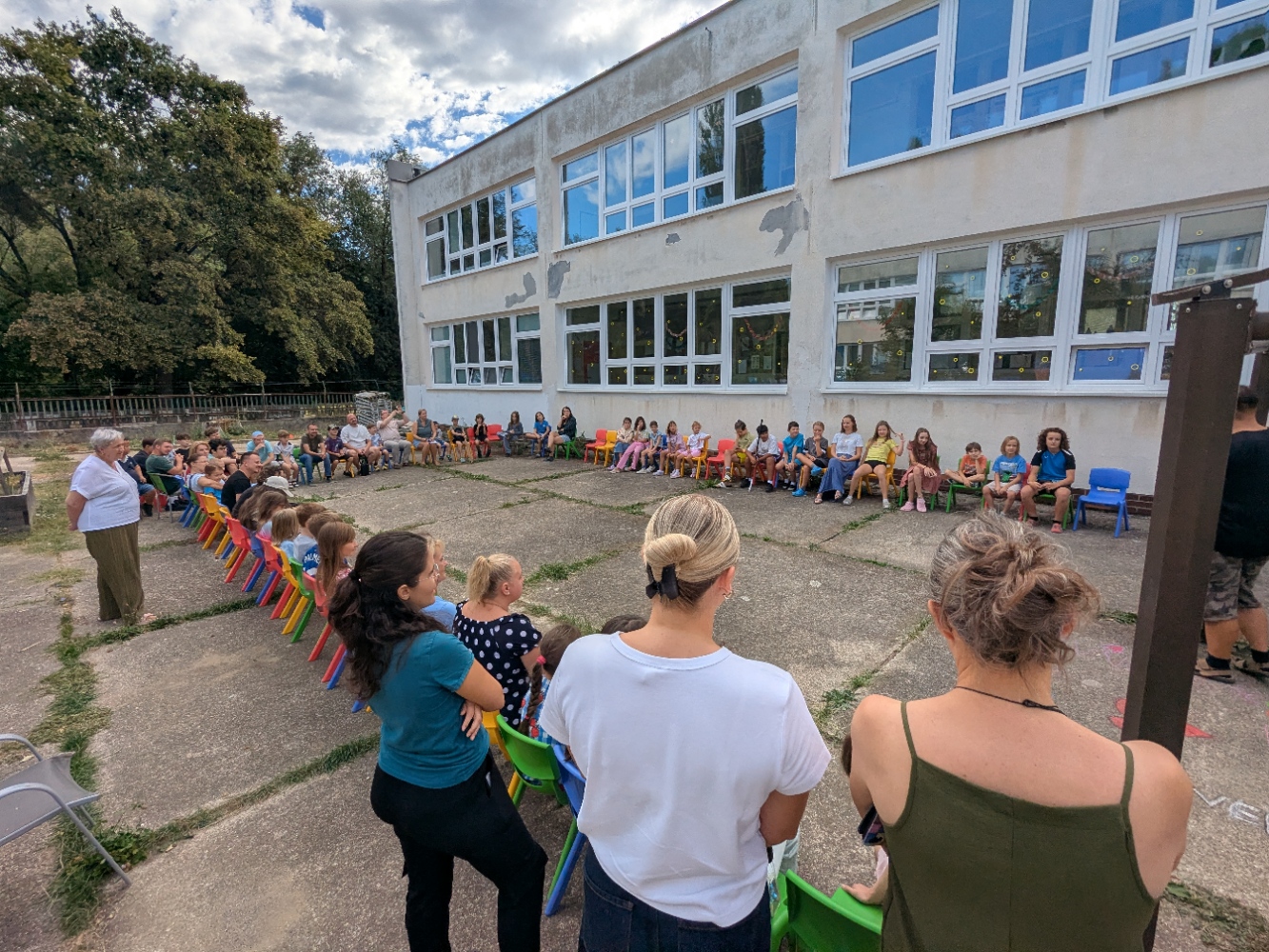
Through the service-learning program designed by the Toma Socolescu Vocational School in Ploiești, Romania, high school students visited their peers at a special center for children with disabilities to spend the day together. Through group projects and arts-and-crafts activities, the students learned to collaborate and developed empathy for one another. At the conclusion of their visit, they participated in a rope game in which each participant held a section of the rope, forming a symbolic circle. This activity represented:
- unity in diversity
- acceptance and collaboration
- the importance of each individual in the communit
One’s Country is Wherever One Does Well- 2nd Primary school of Kos
Developed by the school’s English teacher, Rena Triantafyllou, this educational scenario introduces students in Greece’s multicultural classrooms to the diverse cultural identities represented within their schools. Building on the English coursebook, which presents three different cultures, students are encouraged to choose and explore additional topics related to those cultures based on their own interests, fostering curiosity, inclusion, and intercultural understanding.
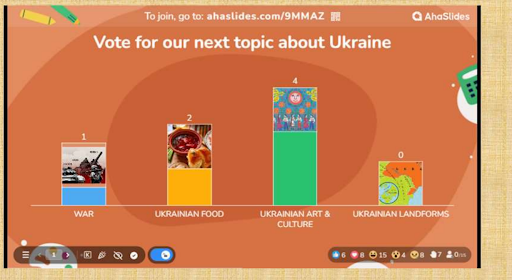
In the case of Rena’s classroom, students chose to explore Ukrainian Art and culture, and learned more about the artwork of Maria Primanechenko!
The aim of this practice was the familiarization of all learners with aspects of multiculturalism and to foster a sense of belonging to the world. This was achieved through the group work, the use of audiovisual materials and engagement in art-making activities.