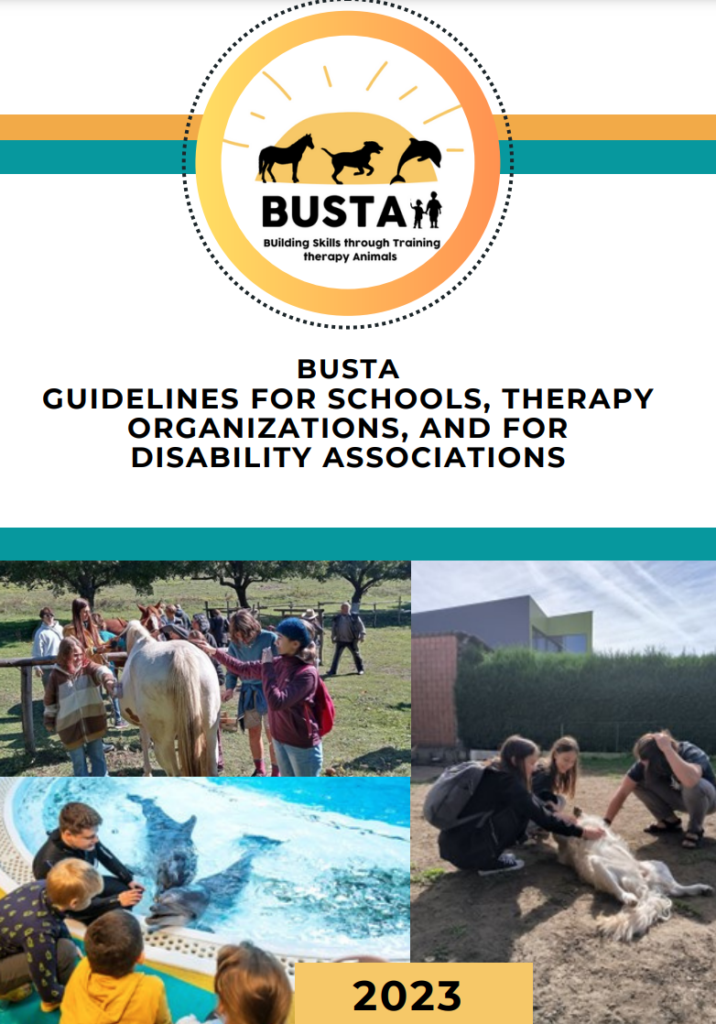
The BUSTA (Building Skills through Training therapy Animals) project is a partnership project, financed by the European Union, between six organisations in three different countries – Belgium, Lithuania and Bulgaria. Three schools and three associations worked upon creating alternative school programs and educational approaches including activity sessions with therapy animals in the period of March 2022 to March 2024. The project was flexible for the setting and conditions every school has. This allowed teachers and therapists in every country to develop programs and to conduct activities that are appropriate for the children they worked with. The project highlighted the acquisition of 21st century lifelong learning skills when the kids participate in the training process of the therapy animals. Moreover, it was also an opportunity for the students to take part in co- creating new training exercises through the process of designing new training games to train the animals to respond to specific needs from a disabled beneficiaries.
Based on observations and acquired experience, the partners created a Guide book – Project Result 3, to assist organisations working with people with special needs and schools that would like to include similar activities in their educational programs.

For more information, please reach out to Mia Schmallenbach: mia@quest-eu.org