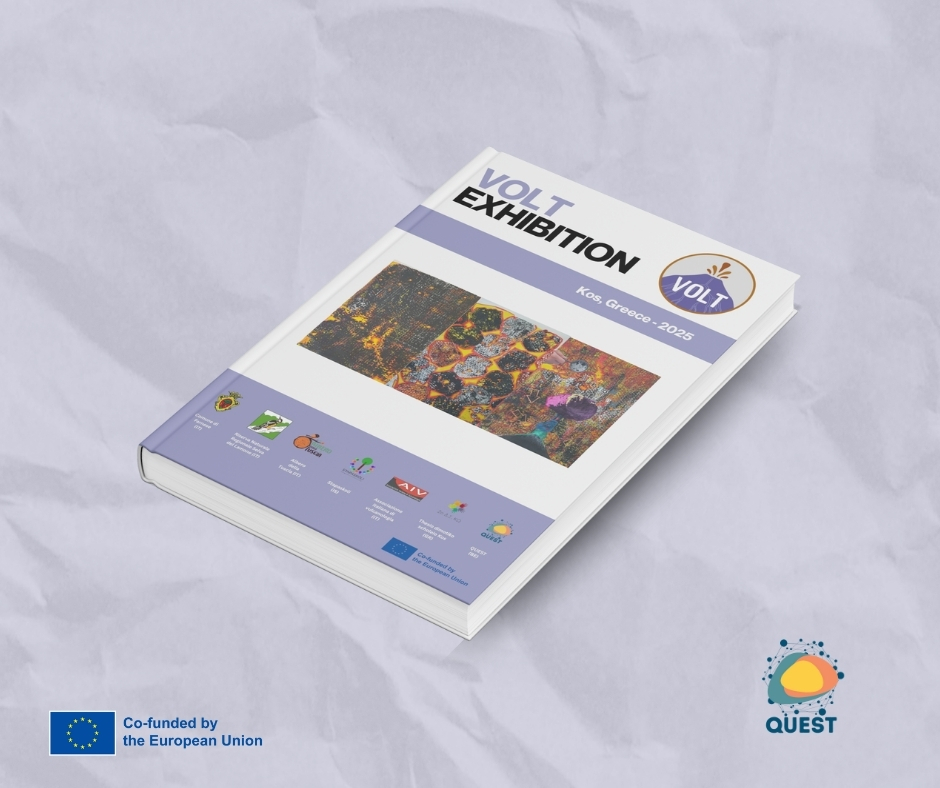
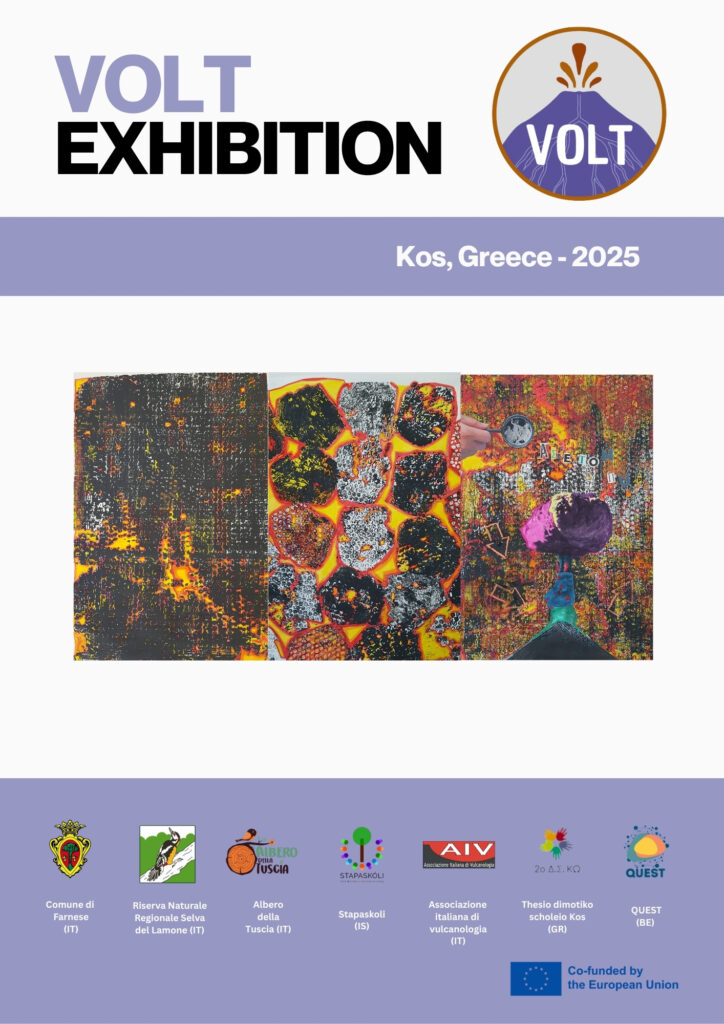
This catalogue presents The VOLT Art Project, an artistic extension of the Erasmus+ project VOLT – VOLcanoes as Teachers, which connects schools in Italy, Greece, and Iceland located in remote volcanic regions of Europe. The project combines STEM exploration and artistic expression, encouraging students to study their local volcanoes and share their discoveries through both scientific and creative lenses.
Originating from the Greek islands of Kos and Nisyros, The VOLT Art Project draws inspiration from the rich geomythology and natural landscapes of these volcanic sites. Through sculpture, collage, and mixed-media experimentation, students transformed geological phenomena into art, reflecting on the power, beauty, and symbolism of volcanoes in their cultural heritage.
The art exhibition was developed under the guidance of Matina Kalkanthi, art workshop coordinator, with contributions from Rena Triantafyllou, coordinator of digital materials and communication, and team members Christina Livydikou, Sevgi Billi, Giannis Symeonidis, and the students of the 5th and 6th grades of the 2nd Primary School of Kos.
By linking scientific inquiry with creative practice, the VOLT project nurtures curiosity, cross-cultural collaboration, and a deeper sense of European identity among students from remote volcanic regions.
Quality Education in Europe for Sustainable Social Transformation (Belgium)
Funded by the European Union. Views and opinions expressed are however those of the author(s) only and do not necessarily reflect those of the European Union or the European Education and Culture Executive Agency (EACEA). Neither the European Union nor EACEA can be held responsible for them.