“Nothing about us without us”
Why this toolkit?
This toolkit was conceived in the framework of the Erasmus+ project YouCare, of which QUEST is a partner.
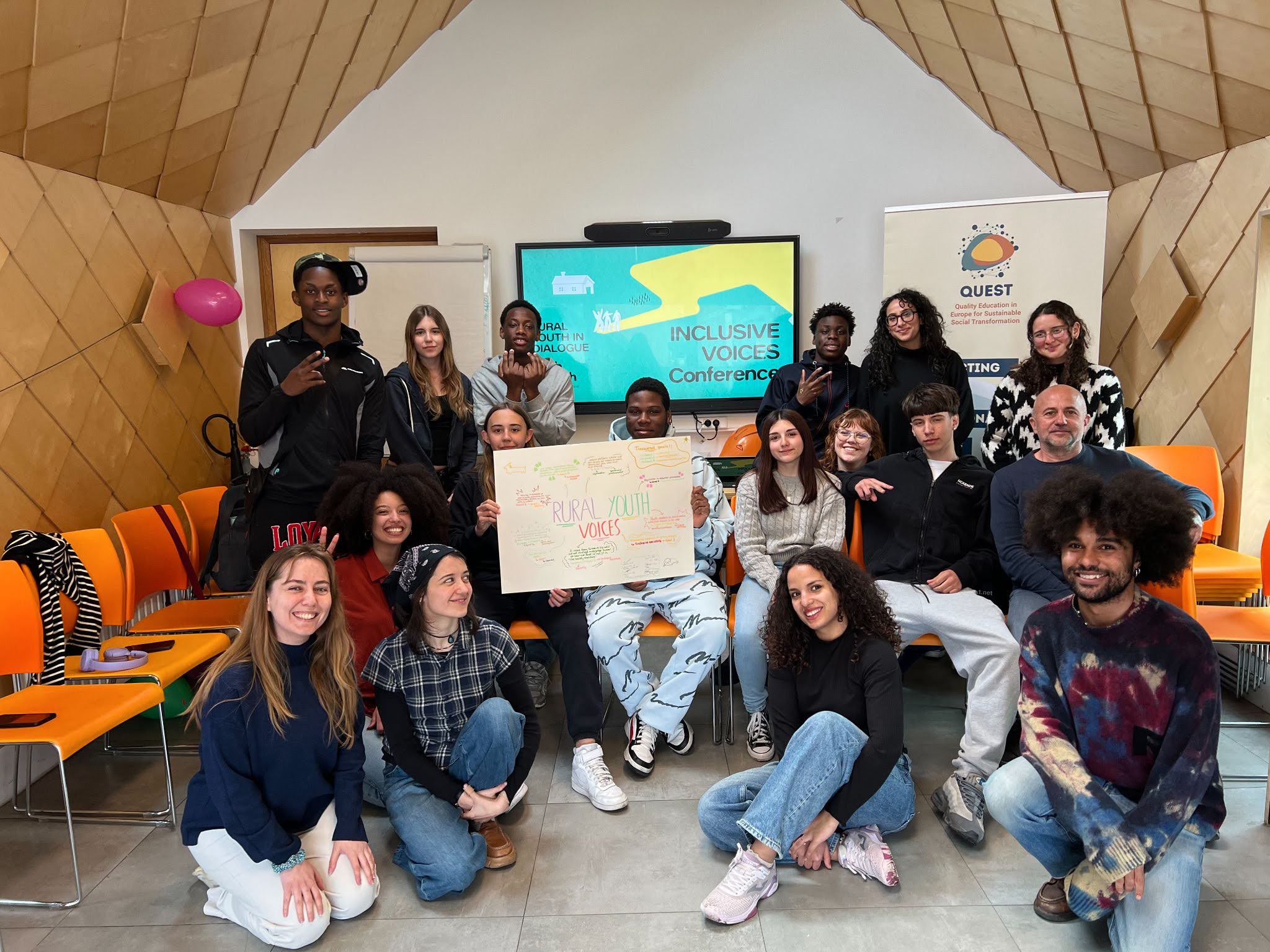
Youth-led Participatory Action Research (YPAR) empowers young people with different trajectories to explore and address issues affecting their lives.
As individuals or organisations working with/for youth it is crucial that we flip the script and ensure that the ones concerned construct their own stories and knowledge and inform community and academic conversations as well as policies.
Indeed, you will see in this toolkit that (participatory action) research is an effective way not only of understanding complex realities, but also of taking concrete action to tackle them collectively.
This is the case for growing issues such as eco-anxieties*, which, far from being an individual problem, requires open spaces for exchange and societal responses if they are to be clarified.
However, if eco-anxiety is the subject we’ll be focusing on here, YPAR can be used for a whole host of other questions and contexts. In fact, most of the methods proposed in this toolkit are drawn from diverse applications, and you can find them all in the bibliography at the end!
Until we make it the norm at higher decision making levels, it is our responsibility to care about, strengthen and multiply youth-led initiatives everywhere, and especially where young people are systemically silenced.

For more information, please reach out to Martina Paone: martina@quest-eu.org